Vehicle Computers & Codes
Store fault information that helps guide diagnostic testing.
DEMO WEBSITE: This is an example auto repair website created by Shop Profit Engine. Business information and contact details are for demonstration purposes only.
KATY, TX ENGINE DIAGNOSTICS
A check engine light, rough idle, hesitation, or a change in how your vehicle drives can leave you wondering what is wrong. Four Oaks Auto Repair helps Katy-area drivers understand the cause before making repair decisions.
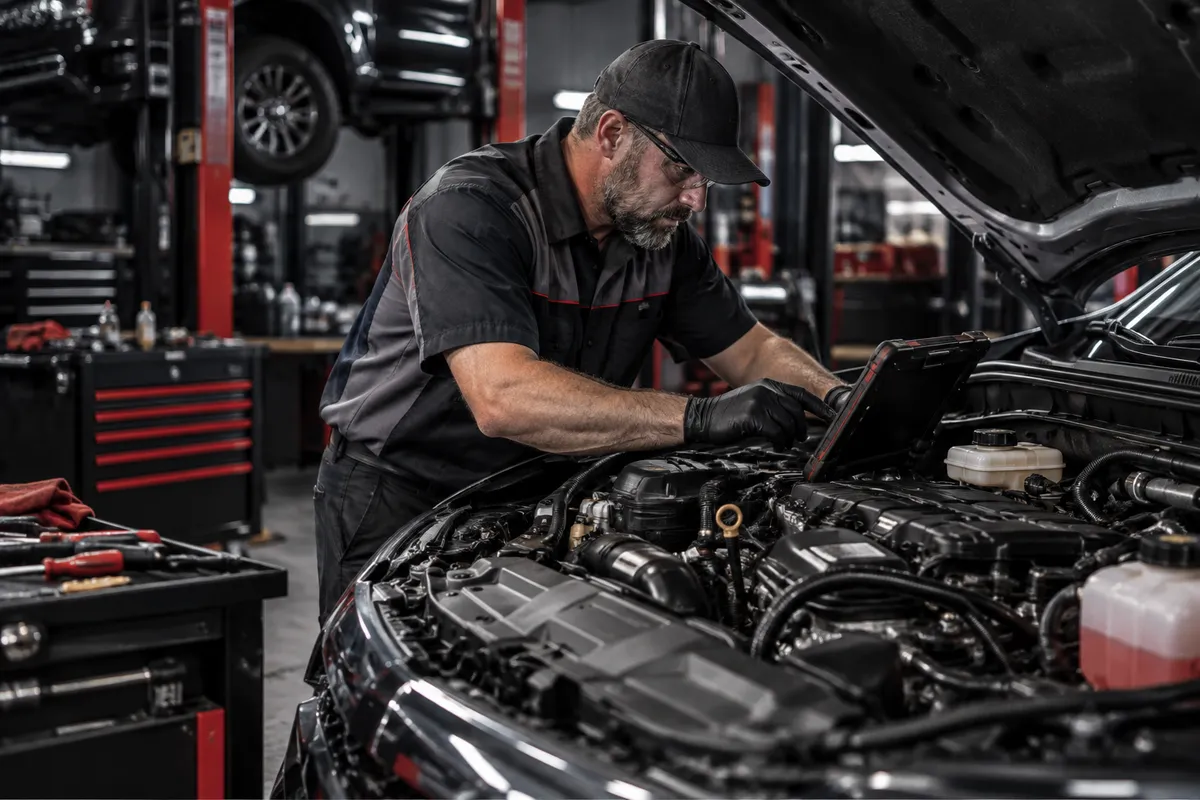
Our ASE-certified technicians use vehicle information, diagnostic equipment, and targeted testing to investigate the problem and explain what the vehicle needs before repairs begin.
✓ ASE-Certified
✓ 3 Year / 36,000 Mile Warranty
✓ Honest Recommendations
✓ Local Katy Auto Repair
COMPLETE ENGINE DIAGNOSTICS
Your vehicle uses computers, sensors, and control systems to monitor engine and emissions-related operation. When a system detects a problem, it may store a diagnostic trouble code and turn on the check engine light.
A trouble code is a starting point, not an automatic instruction to replace a specific part. A code can identify the system or condition that needs investigation, while the underlying cause may involve wiring, sensors, fuel delivery, ignition, air intake, mechanical condition, or other factors.
Technicians combine the vehicle’s symptoms with stored codes, operating data, visual checks, and targeted testing. Depending on the concern, that may include evaluating fuel trims, misfire data, sensor signals, electrical circuits, or mechanical operation.
The same warning light can appear for very different reasons. That is why reading a code and diagnosing the cause are not the same service.
At Four Oaks Auto Repair, we focus on understanding the problem so the recommended repair addresses the condition that brought you in.
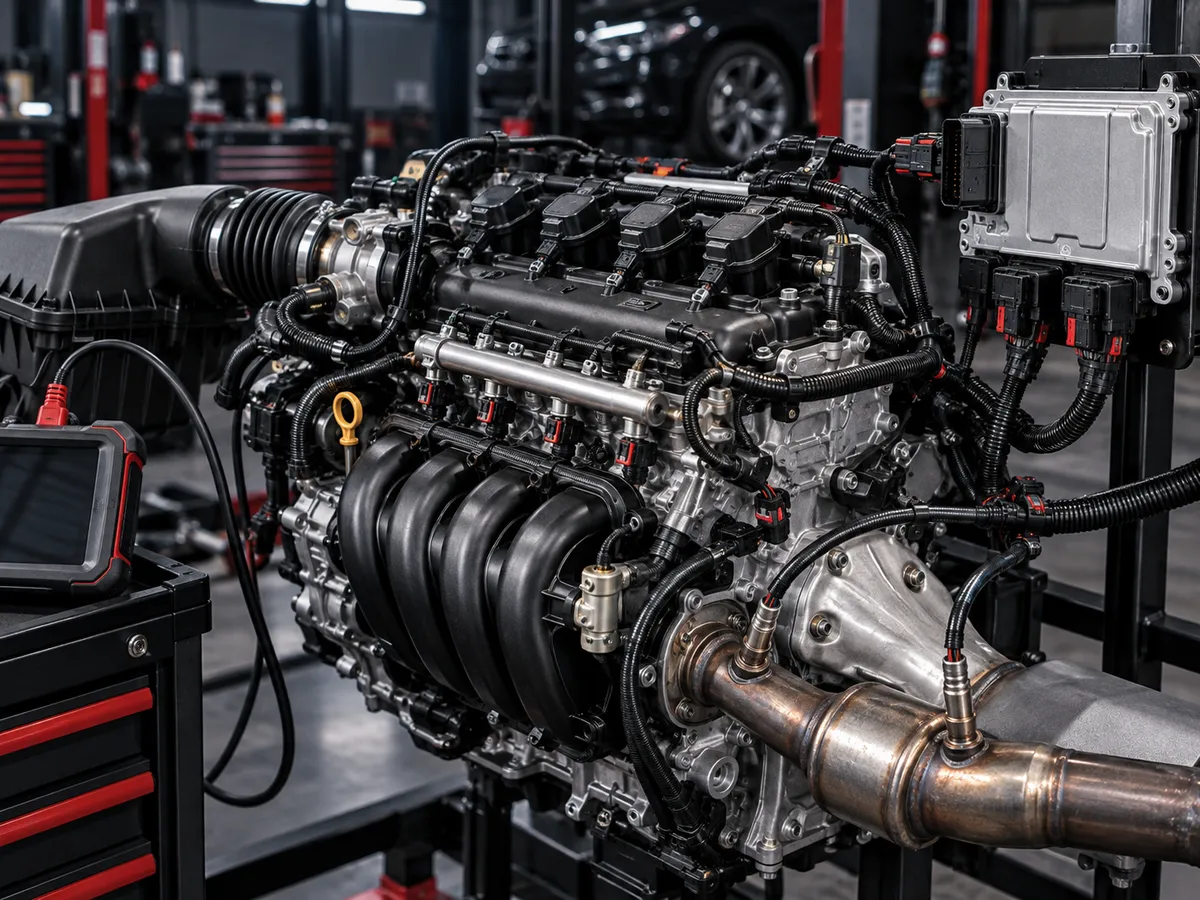
Store fault information that helps guide diagnostic testing.
Report engine and system operating conditions.
Support combustion, performance, and efficient operation.
Influence airflow, fuel control, and emissions monitoring.
Carry power and signals between components.
Help confirm the cause and check the repair result.
ENGINE DIAGNOSTIC WARNING SIGNS
Warning lights and drivability changes do not all have the same cause. The symptoms you notice help guide the tests needed to understand what is happening.
A steady check engine light means the vehicle has detected a condition that deserves diagnosis. The cause cannot be determined from the light alone.
A flashing check engine light can indicate an active severe misfire. Reduce driving and seek prompt professional advice; stop safely if the vehicle runs poorly.
An uneven idle may involve ignition, fuel delivery, air leaks, engine controls, or mechanical conditions.
A delay or stumble when accelerating can involve several engine and control-system problems.
Intermittent stalling or difficulty starting can be related to fuel, ignition, sensors, electrical power, or other causes.
An unexpected fuel-economy change may reflect engine operation, driving conditions, maintenance, or other vehicle issues.
Surging, reduced power, or inconsistent performance can have multiple causes and should be evaluated.
An emissions-related fault or incomplete readiness monitors may require diagnosis; clearing codes alone does not resolve the cause.
HOW ENGINE DIAGNOSTICS WORK
Modern engines depend on mechanical operation, electronic control, fuel delivery, ignition, airflow, and emissions monitoring. Diagnosis looks at how these systems interact instead of assuming one warning code names the failed part.
VEHICLE INFORMATION
The engine control module monitors operating conditions and may store diagnostic trouble codes when it detects a fault.
Freeze-frame information and live data can help technicians understand when a problem occurred and how the vehicle is operating.
A code identifies a condition or circuit to investigate—not necessarily a failed component.
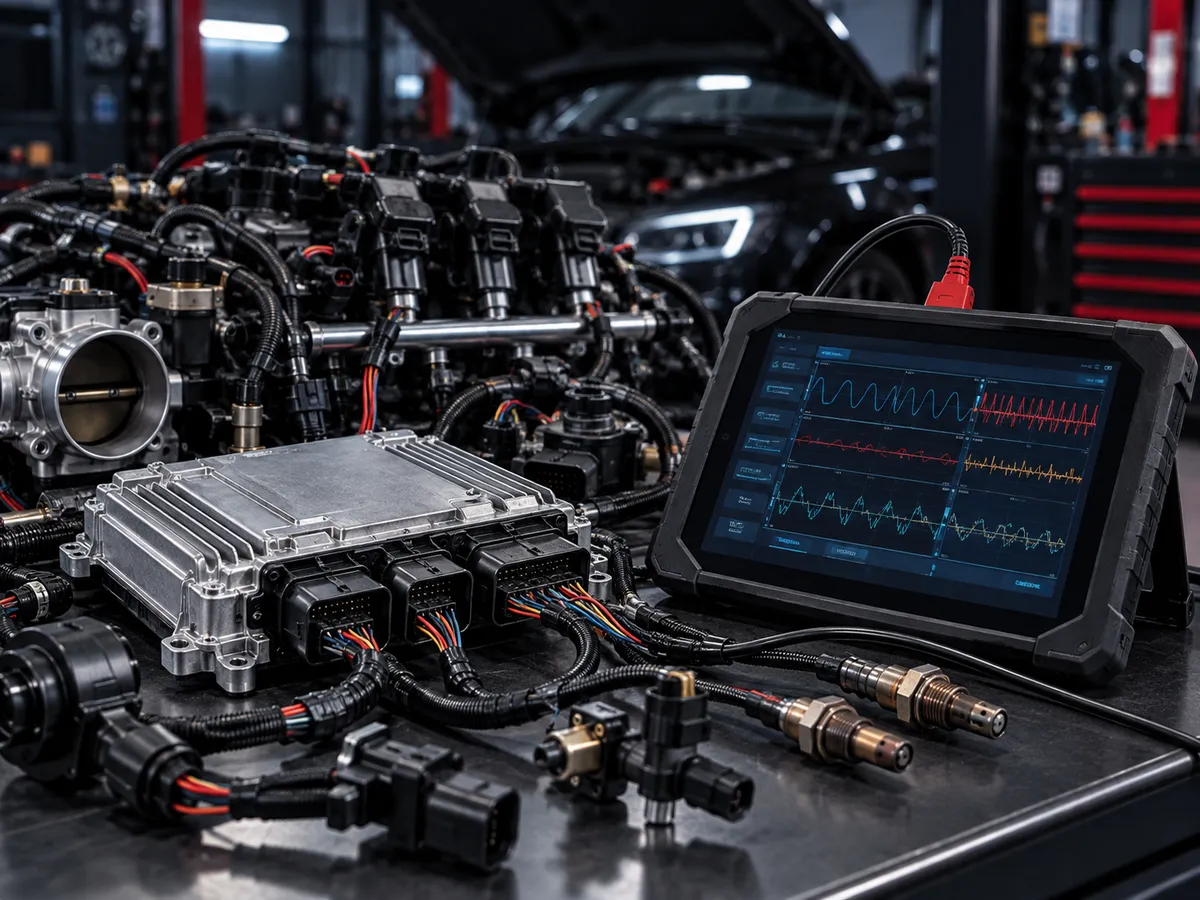
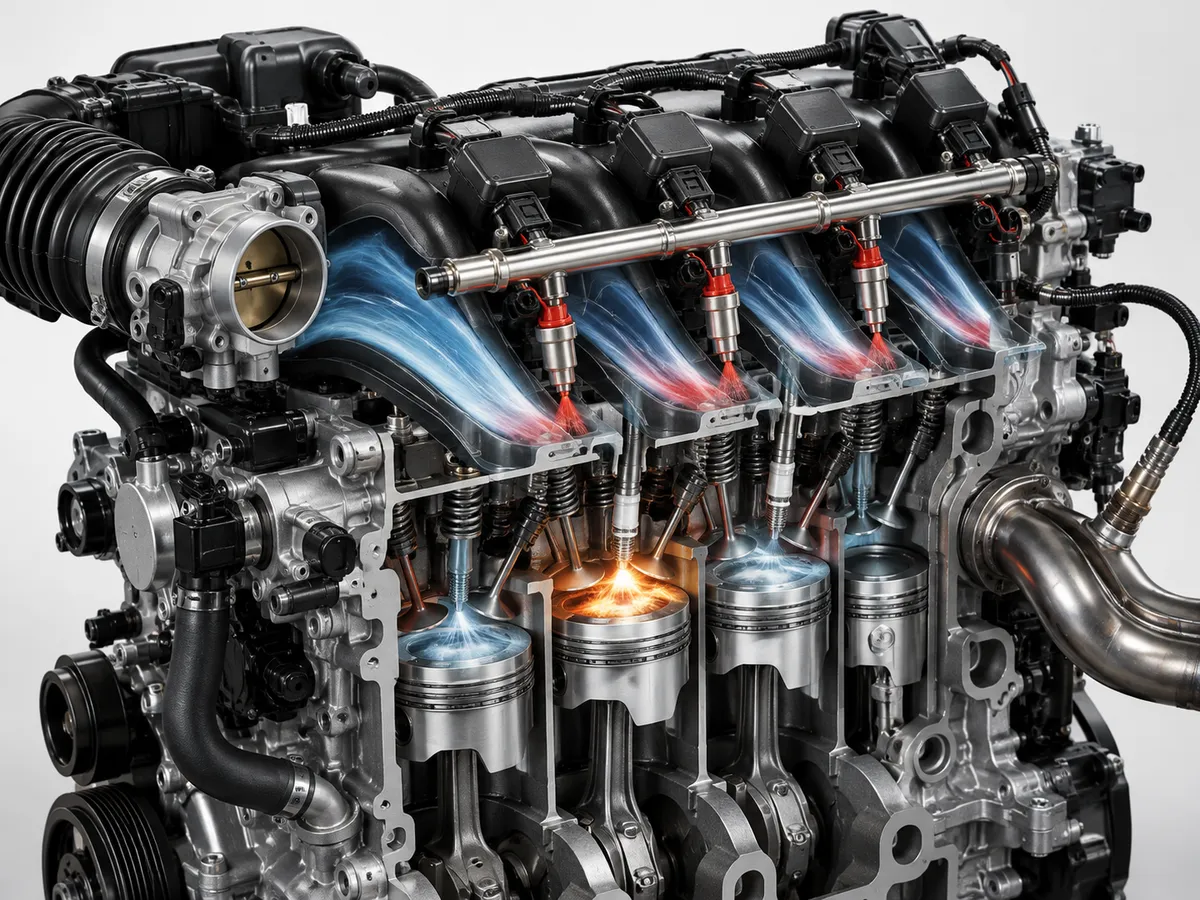
ENGINE OPERATION
An engine needs the correct balance of air, fuel, ignition, and mechanical operation.
Intake leaks, fuel-delivery concerns, ignition faults, and other conditions can create similar symptoms.
Testing helps separate the possibilities before repairs are recommended.
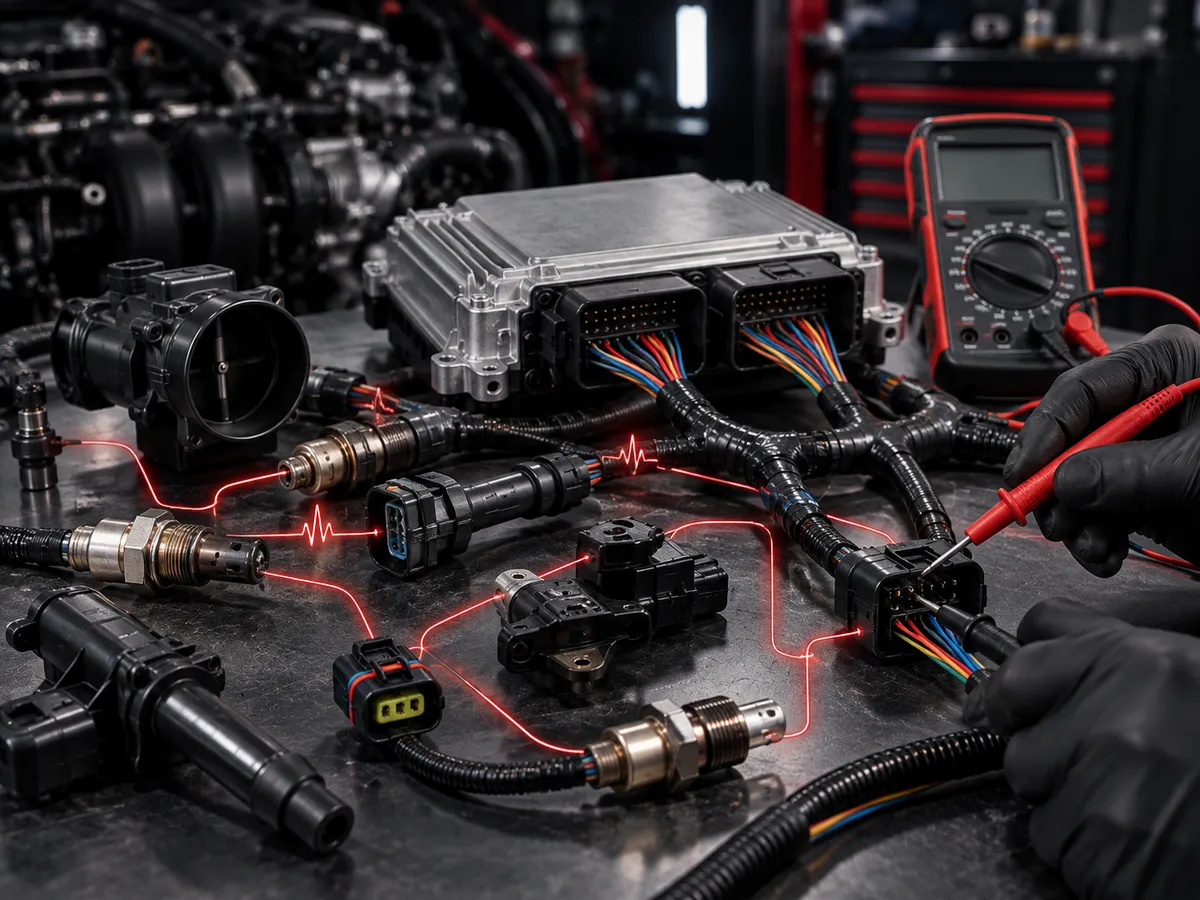
ELECTRICAL SYSTEMS
Sensors report operating conditions while actuators and electrical circuits help the vehicle respond.
A damaged connector, poor power or ground, wiring problem, or inaccurate sensor signal may affect engine operation.
Testing the circuit matters before replacing a component named by a code.
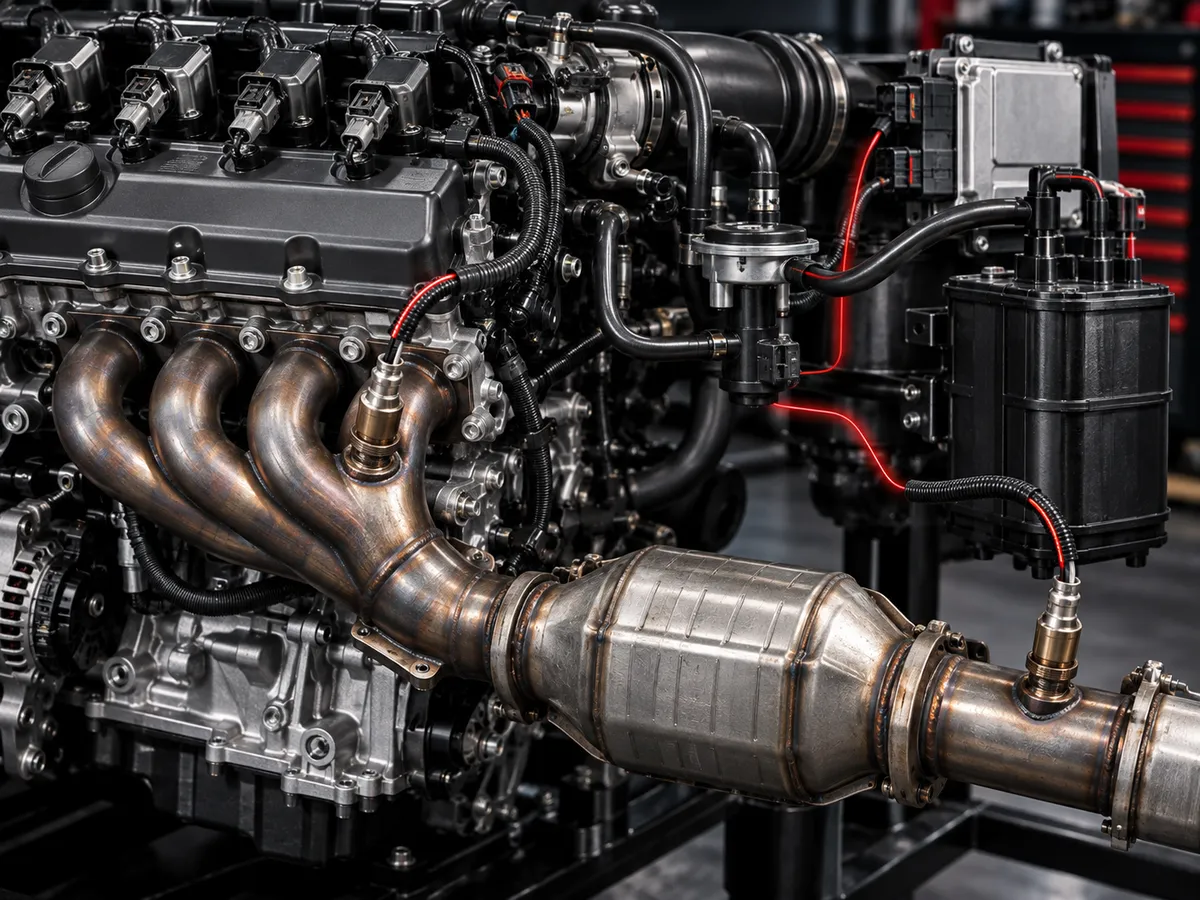
SYSTEM MONITORING
Engine and emissions controls monitor conditions such as combustion quality, air-fuel mixture, and exhaust-system operation.
Mechanical problems can also affect the readings seen by electronic systems.
A complete diagnostic process considers both electronic information and the engine’s actual condition.
HOW ENGINE DIAGNOSTICS WORK
Modern engines depend on mechanical operation, electronic control, fuel delivery, ignition, airflow, and emissions monitoring. Diagnosis looks at how these systems interact instead of assuming one warning code names the failed part.
VEHICLE INFORMATION
The engine control module monitors operating conditions and may store diagnostic trouble codes when it detects a fault. Freeze-frame information and live data can help technicians understand when a problem occurred and how the vehicle is operating. A code identifies a condition or circuit to investigate—not necessarily a failed component.
ENGINE OPERATION
An engine needs the correct balance of air, fuel, ignition, and mechanical operation. Intake leaks, fuel-delivery concerns, ignition faults, and other conditions can create similar symptoms. Testing helps separate the possibilities before repairs are recommended.
ELECTRICAL SYSTEMS
Sensors report operating conditions while actuators and electrical circuits help the vehicle respond. A damaged connector, poor power or ground, wiring problem, or inaccurate sensor signal may affect engine operation. Testing the circuit matters before replacing a component named by a code.
SYSTEM MONITORING
Engine and emissions controls monitor conditions such as combustion quality, air-fuel mixture, and exhaust-system operation. Mechanical problems can also affect the readings seen by electronic systems. A complete diagnostic process considers both electronic information and the engine’s actual condition.
NOT SURE WHAT THE WARNING LIGHT MEANS?
A warning light or drivability problem is a reason to investigate—not a reason to guess which part to replace. Let us evaluate the concern and explain the findings.
ENGINE DIAGNOSTIC TESTING
Reading stored codes can help identify where to begin, but a repair recommendation should be supported by the vehicle’s symptoms and relevant testing. The goal is to confirm the cause rather than replace parts based on a code description alone.
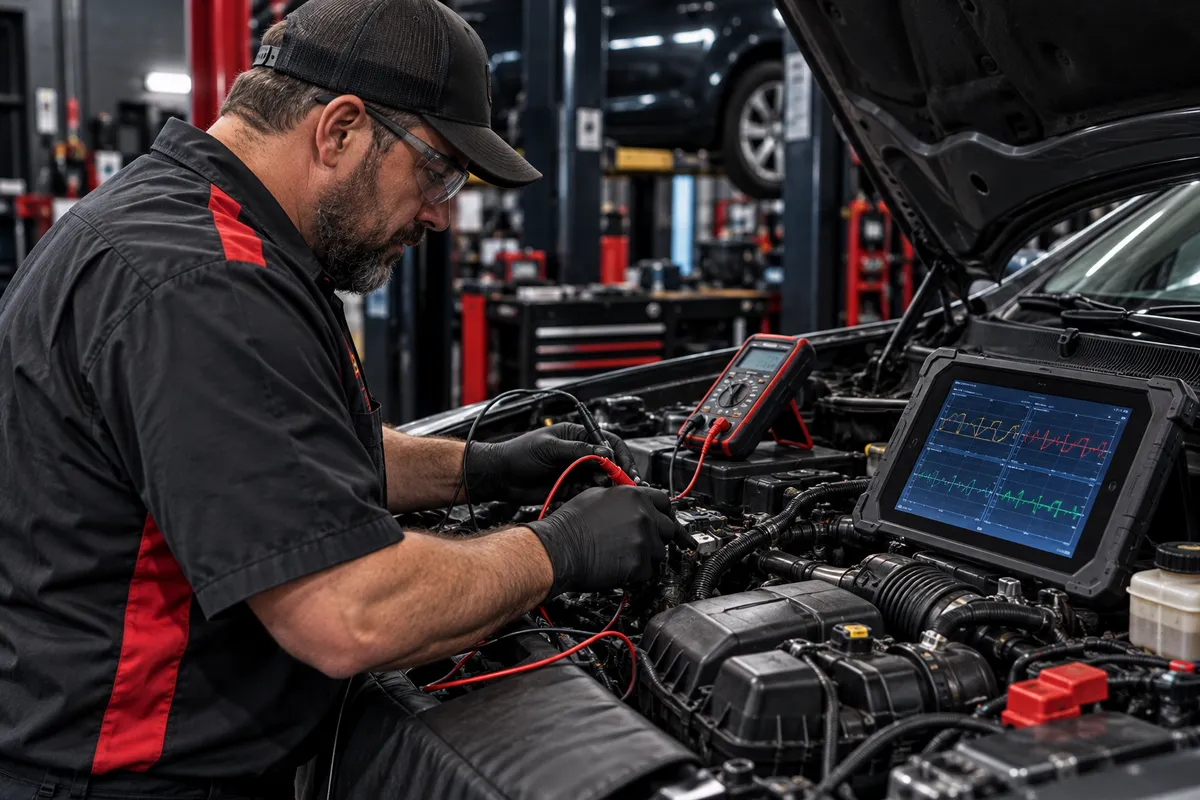
We document when the issue happens and whether the concern can be reproduced.
Stored information may identify the system or operating conditions that need further investigation.
We compare relevant sensor and control information with how the vehicle is actually operating.
When indicated, power, grounds, wiring, connectors, and signal behavior may need testing.
Targeted checks can help distinguish misfire, fuel-delivery, intake, or related drivability concerns.
When appropriate, diagnosis considers mechanical condition and emissions-control operation instead of treating every issue as a failed sensor.
OUR APPROACH
The goal is not to replace whichever part appears in a trouble-code description. It is to identify the condition causing the problem and recommend a repair supported by the findings.
STRAIGHTFORWARD DIAGNOSTIC SERVICE
Our process helps you understand what the warning light or drivability concern means, what testing found, and what happens next.
We document the concern, review vehicle information, and test the relevant systems to determine the cause.
We explain the findings and recommended repair so you can make an informed decision.
Once the work is approved, we complete the repair and verify the original concern has been addressed.
DIAGNOSTIC & REPAIR DECISIONS
A check engine light can have many causes, and the same symptom can come from different systems. Diagnosis helps determine which repair is appropriate instead of relying on guesswork.
A trouble code is information to investigate—not proof that the part mentioned in the code needs replacement.
A trouble code points toward a monitored condition or circuit. Understanding what a trouble code means is different from proving which component caused the fault.
A basic scan reads stored information, but a professional engine diagnostic process can also involve live data, electrical checks, mechanical tests, and verification.
If a light returns after a repair or after codes were cleared, the underlying condition may still be present or another issue may need attention. Why the check engine light comes back depends on the actual fault and operating conditions.
Diagnostic time depends on the symptom, system complexity, test access, and whether the issue is intermittent. Why engine diagnostic costs vary is often tied to the testing needed to confirm a cause.
A flashing check engine light, severe shaking, loss of power, overheating, or other serious symptoms deserve prompt attention. Driving with a flashing check engine light can risk additional damage; seek professional guidance.
DRIVING CONDITIONS MATTER
The conditions under which a problem appears can help a technician reproduce and diagnose it. Stop-and-go traffic, hot-weather operation, and longer trips are useful details to share when a symptom occurs.
If a vehicle stalls, hesitates, or idles roughly in traffic, tell the technician whether the problem happens at a stop, during acceleration, or after extended idling.
If a symptom appears after a long drive or while the engine is hot, that timing can help guide testing. Heat alone does not prove a specific component has failed.
A check engine light or unresolved drivability concern deserves attention before a longer trip. Share when the problem occurs so the shop can evaluate the concern.

WHY KATY DRIVERS CHOOSE FOUR OAKS
You deserve more than a list of fault codes. Four Oaks Auto Repair focuses on understanding the concern, explaining the test results, and recommending repairs that address the actual problem.
We explain what testing indicates rather than automatically replacing a part named in a code.
We evaluate the system involved and verify the concern after approved repairs.
Four Oaks serves Katy-area drivers with straightforward explanations and recommendations.
We answer your questions and help you understand the repair before work begins.
REPAIRS BACKED WITH CONFIDENCE
Qualifying repairs are backed by our warranty, giving you added confidence after you leave the shop.
ENGINE DIAGNOSTICS FAQ
Straightforward answers to questions about check engine lights, fault codes, diagnostic testing, and repair decisions.
It means the vehicle has detected a condition in a monitored system. The cause can range from a relatively simple issue to a problem requiring more involved diagnosis.
Not necessarily. Codes identify a monitored condition or circuit and help guide testing; they do not automatically prove a specific component has failed.
A scan retrieves information. Diagnosis combines the concern, stored data, live readings, inspection, and targeted tests to determine the cause.
It depends on the symptoms and whether the light is steady or flashing. A flashing light or severe running problem deserves prompt attention; stop safely if the vehicle is running poorly.
A flashing malfunction indicator light can indicate an active misfire severe enough to risk catalytic-converter damage. Reduce driving and seek prompt professional guidance.
Time depends on the symptom, vehicle design, testing required, and whether the concern can be reproduced. Intermittent problems can take longer to confirm.
Clearing a code does not fix the underlying condition. The light may return when the monitoring system detects the problem again.
Diagnostic cost depends on the testing required to identify the cause. A basic scan and a complete diagnostic investigation are not the same service.
RELATED AUTO REPAIR SERVICES
Different vehicle concerns can involve related systems. These services can help address other maintenance and repair needs.
Cooling, airflow, and climate-control concerns may require separate system testing.
Routine maintenance supports vehicle reliability and helps identify developing concerns.
Ride, handling, and steering concerns require their own inspection and repair decisions.
REAL PEOPLE. WHEN YOU NEED US.
⭐⭐⭐⭐⭐ 4.9 out of 5 (300+ reviews)
PROUDLY SERVING OUR COMMUNITY
Four Oaks Auto Repair is conveniently located in Katy, TX and proudly serves drivers throughout Katy and nearby communities. From routine maintenance to diagnostics and more complex repairs, we're here when you need a dependable local shop.

✓ Katy
✓ Cinco Ranch
✓ Fulshear
✓ Richmond
✓ Brookshire
✓ West Houston
✓ Pecan Grove
✓ Mission Bend
✓ Katy
✓ Cinco Ranch
✓ Fulshear
✓ Richmond
✓ Brookshire
✓ West Houston
✓ Pecan Grove
✓ Mission Bend
⭐⭐⭐⭐⭐ 4.9 Google Rating
Based on 300+ customer reviews
Mon – Fri: 7:30 AM – 5:30 PM
Sat: 8:00 AM – 1:00 PM
Sun: Closed
⭐⭐⭐⭐⭐ 4.9 Google Rating
Based on 300+ customer reviews
1234 Main Street
Katy, TX 77449
☎ (281) 555-0123
Mon–Fri: 7:30 AM–5:30 PM
Sat: 8:00 AM–1:00 PM
Sun: Closed
© 2026 Four Oaks Auto Repair. All Rights Reserved.
Website by Shop Profit Engine